Erythema nodosum
LAST UPDATED: May 28, 2022
Introduction
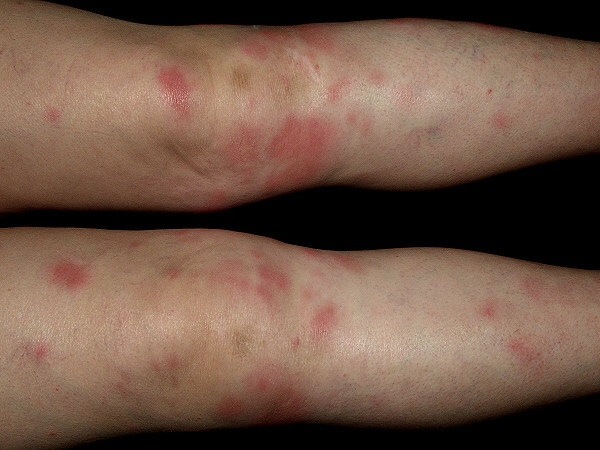
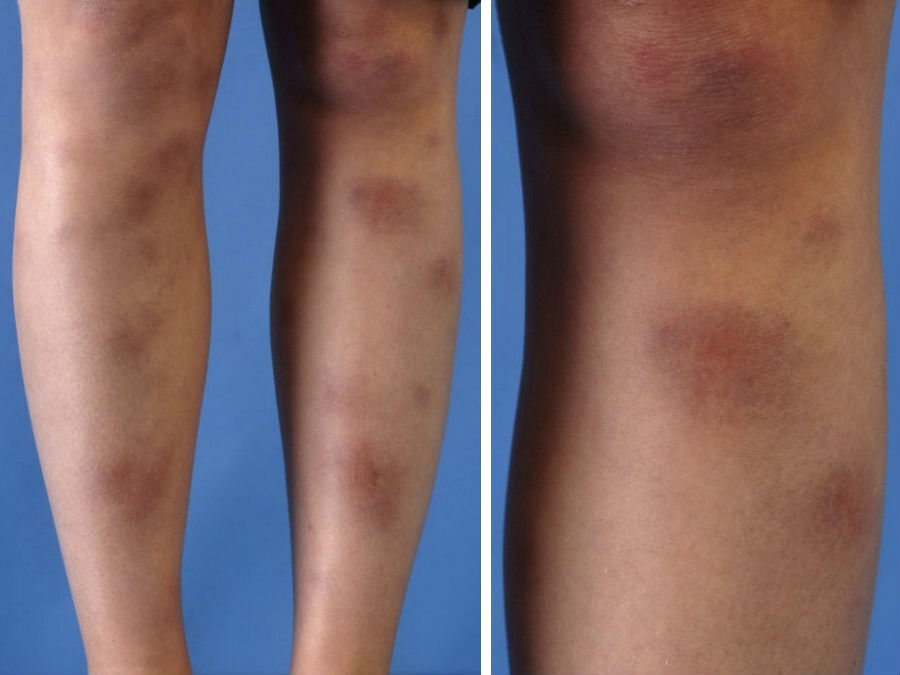
Erythema nodosum (EN) is characterised by painful, erythematous, and sometimes bruised-looking, nodules on the anterior surface of the legs. It is a type of panniculitis, ie an inflammatory disorder of the subcutaneous adipose tissue, affecting 1-5 in 100 000 population per year.
This chapter is set out as follows:
Aetiology
EN is thought to be a hypersensitivity reaction to antigens. Numerous causes have been identified:
-
Idiopathic in one-third of cases
-
Infective
-
Streptococcal infections (often URTI) account for up to 10-30% of cases in adults
-
Tuberculosis and atypical mycobacterial infection
-
Many other infections have been implicated eg Yersinia, gastrointestinal infections, Mycoplasma, leprosy
-
Medications - including sulphonamides, hepatitis B vaccine, isotretinoin, and SSRI. Oral contraceptive pills have become a rare cause since their oestrogen content was greatly reduced. Where erythema nodosum has arisen in patients receiving antibiotics for infections (such as penicillins) it is difficult to discern whether the cutaneous reaction is due to the antiobiotic or the infectious process
-
Rheumatological and autoimmune conditions
-
Inflammatory bowel disease - ulcerative colitis or Crohn's disease
-
Malignancy, mainly haematological, is a rare cause of EN
History
-
It is much more common in women than men
-
Most cases arise between the ages of 15-45
-
Lesions are painful
-
Most patient with EN feel otherwise well
Clinical findings
Distribution
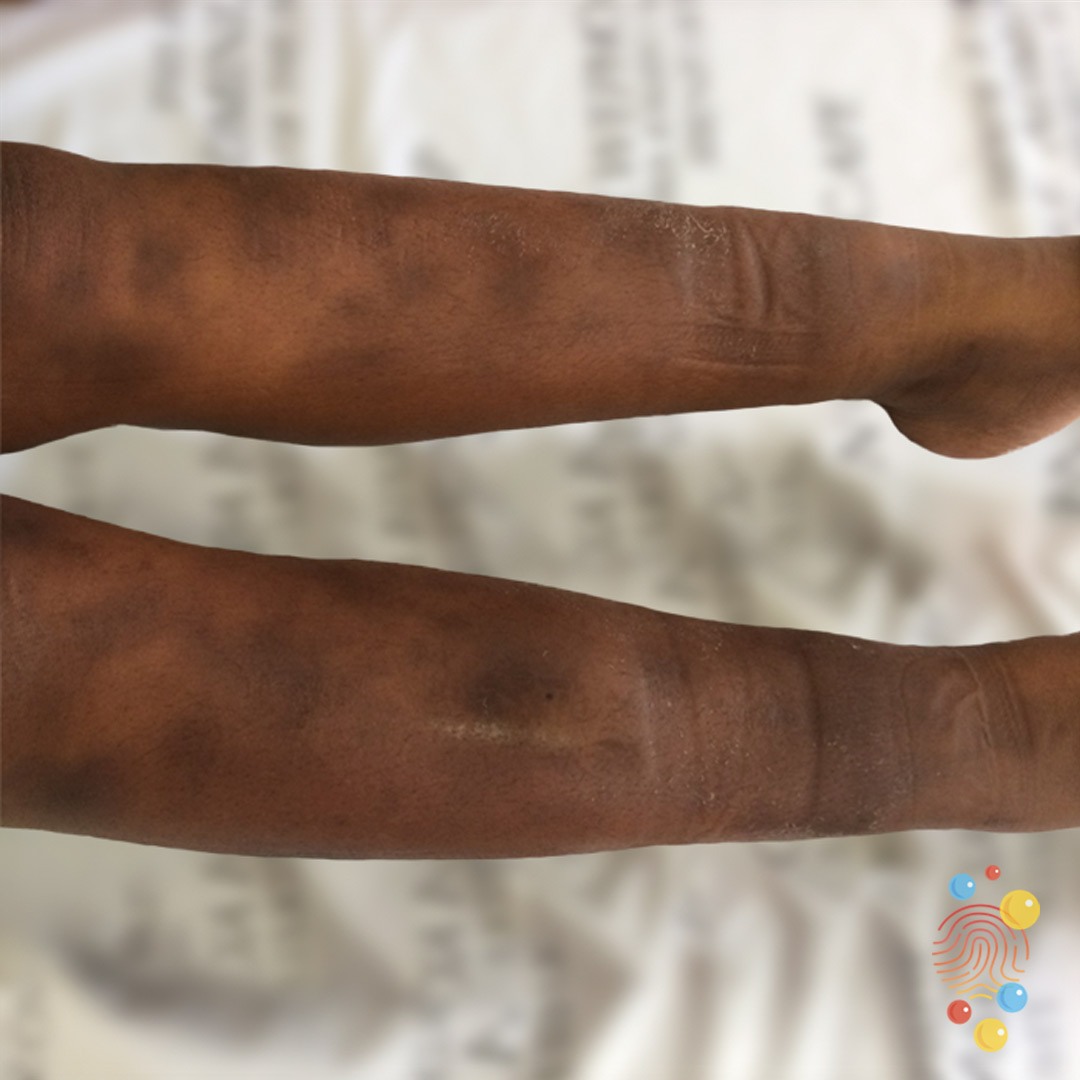
- Lesions are often multiple and symmetrical
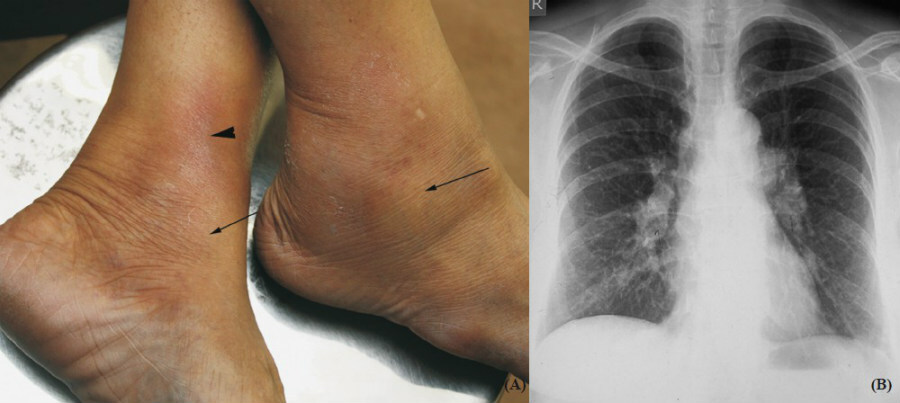
- The lower legs (shins, knees and ankle) are the predominant site
- Other body sites can be affected - at distant sites lesions tend to be smaller
Morphology
- Tender, erythematous, warm nodules and plaques - sometimes better palpated than seen
- Lesions vary from 1-5 cm in diameter
-
With time lesion become purple then fade as a bruise - lesions tend to last 3-6 weeks
-
New crops arise over several weeks
- Erythema nodosum is a type of panniculitis, of which there are many types
Systemic symptoms
- Although many patients with EN feel otherwise well, some will have fever, malaise and arthralgia. Joint symptoms may persist for months afterwards but will resolve
Clinical Images
Please refer to notes on image rights at bottom of the page with regards to individual image
ownership.
Investigations
-
EN is usually diagnosed clinically, however, in atypical cases (eg absence of lesions on the legs, persistence or ulceration of lesions) an elliptical biopsy is needed, which shows a predominantly septal panniculitis without vasculitis
-
Investigations required in EN include:
-
Throat swab and ASO titre for streptococcus
- Urinalysis
-
Blood tests - FBC and inflammatory markers
-
CXR for TB and sarcoidosis
-
Other tests depending on suspected aetiology
Management
Step 1: general measures
- Manage any treatable or removable (eg medication) cause
- Most cases of erythema nodosum regress spontaneously in 3–4 weeks, but relapses are common. For many patients treatment is conservative and may include:
- Limiting physical exercise and bed rest, especially in cases of marked leg swelling
- NSAID such as naproxen 500 mg daily are helpful for pain and for hastening resolution
Step 2: other treatments
-
For more prolonged / troublesome cases, a number of treatments can be used:
- Corticosteroids - can be used intralesionally or short courses given systemically. However corticosteroids must not be used if there is suspicion of TB
- Systemic tetracyclines (doxycycline 100 mg OD or lymeycline 408mg OD), which have an anti-inflammatory effect
- Potassium iodide 360-900 mg/day
- Colchicine
-
Treatments sometimes used by specialists include hydroxychloroquine and dapsone
Disclaimer - the author PCDS cannot accept responsibility for any misleading or incorrect statements, and the management of individual patients remains the direct responsibility of the individual doctor. We do however hope that visitors to this site can contact us regarding comments that are considered misleading or incorrect so that we can continue to improve the site.
Image Rights - The PCDS would like to thank Dermatoweb, DermQuest (Galderma), and others who have contributed images. All named individuals and organisations maintain copyright for the relevant images.